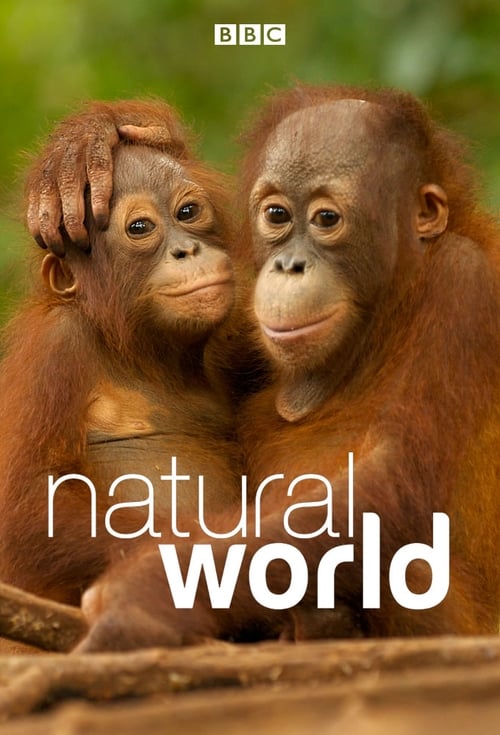
Natural World
1983
📺 39 Seasons
🎬 543 Episodes
📅 Returning Series
🌐 EN
⏱️ 60 min/episode
Documentary
Natural World is a nature documentary television series broadcast annually on BBC Two and regarded by the BBC as its flagship natural history brand. It is currently the longest-running series in its genre on British television, with more than 400 episodes broadcast since its inception in 1983.
Natural World is produced by the BBC Natural History Unit in Bristol, but individual programmes can be in-house productions, collaborative productions with other broadcasters or films made and distributed by independent production companies and purchased by the BBC. Natural World programmes are often broadcast as PBS Nature episodes in the USA. Since 2008, most Natural World programmes have been shot and broadcast in high definition.
Where to Watch (US)
Stream
 Britbox Apple TV Channel
 BritBox
 BBC Select Apple Tv channel
Seasons
Season 1
Follows the great land migration in Africa, one of the seven wonders of the natural world. Wildebeests, numbering in the millions, run for their lives on a-mile trek to find food and water, battling predators along the way.
Season 2
The programme is about bumble bees in the forests of New England. We follow a queen bumble bee as she emerges from hibernation to find a suitable nest site and establish a colony from the eggs she has carried over the winter. She duels with a rival queen. Honey bees, bee mites and wax moths also feature in her life story.
Season 3
As a child Jane Goodall dreamt of going to Africa and living with the animals. In 1960 her dream became reality: she began a study of chimpanzees in Tanzania's Gombe National Park. Today, more than two decades later, her work still continues, and it has given us a remarkable portrait of the animal most like man. Spanning three generations of chimps, it shows them in all their moods.... playful infants, turbulent adolescents and adults whose behavior ranges from tender motherhood to hunting and even murder.
Season 4
Land of the Tiger looks at the protected species of the Kanha and Ranthambore National Parks, celebrating these elusive and endangered big cats and exploring the delicately balanced ecosystem they inhabit. Interweaving footage of monkeys, deer and the tiger’s main competitor, crocodiles, the couple’s impressive cinematography brings the private world of tigers to life, as these magnificent creatures swim, play, mate, suckle their young and stalk their prey.
Season 5
Season 6
Season 7
Documentary on the wolf packs of Arctic Canada.
Season 8
An intimate and touching glimpse into the lives of these gentle, highly intelligent creatures, it follows a team of scientists and volunteers as they continue the research of the late ethologist Dian Fossey.
Season 9
Season 10
Season 11
David Attenborough and Cynthia Moss narrate an award-winning film about 18 months in the life of elephant matriarch Echo and her family, who live in Kenya's Amboseli National Park.
Season 12
Season 13
Focusing on a pair of albatrosses during the year they produce and raise a chick, Mysteries of the Ocean Wanderers is an engaging and atmospheric insight into the wildlife of the sub-Antarctic Crozet Islands.
Delving into a previously unknown area, the film follows the intriguing work of French scientist Henri Weimerskirch as he uses satellite tracking and time-depth recorders to follow the ever changing population of these remote isles.
Season 14
A deeply moving account of elephant family life, The Next Generation is the sequel to the BBC Natural History Unit's award-winning Echo of the Elephants. The award-winning cameraman Martyn Colbeck returns to direct and photograph this piece, his stunning cinematography bringing to life the touching intimacy, brutal fights and amazing perseverance of these magnificent animals.
Filmed over four years, elephant expert, leading conservationist and world-renowned research zoologist Cynthia Moss continues her research into the ageing matriarch Echo and her rapidly expanding clan.
Season 15
Wildlife film about sperm whales, revealing the secret lives led by these often misunderstood ocean giants.
Scientists all over the world are now learning about the secret lives of sperm whales, the world's largest hunters that spawned the legendy of Moby Dick. Although Mellville painted them as fearsome beasts of the sea, they are actually shy creatures, and cameraman Rick Rosenthal needed patience and persistence to film them at close quarters. They turn out to be efficient hunters with a close family network involving sophisticated and vocal social lives.
Season 16
Season 17
Focusing on the wildlife of the remote island of South Georgia in the South Atlantic.
Season 18
A dramatic film about Right Whales, the rarest of all the great whales. There's a race on to save them and even US nuclear submarines are part of the effort. Dramatic footage above and below the water reveals these fascinating giants battling for mates, rearing young, sailing with their tails and meeting other whales, dolphins, seals and sharks. It's called the Right Whale because it used to be the right whale to hunt - big and full of blubber. Today it's baffling biologists who cannot understand why, in spite of total protection, it refuses to recover.
Season 19
This film follows a year on the exquisite west coast of Scotland, in the intimate company of a family of otters. Guided by their mother, the otter cubs survive the wildest storms of the Scottish winter, striving to overcome many challenges on their way to independence. The west coast is warmed by the Gulf Stream which is why dolphins and sharks, whales and puffins all come here to share it with the otters. Two years in the making, this film is packed with surprises and excitement and set in the most breathtaking scenery to be found anywhere in Britain.
Season 20
David Attenborough narrates this documentary following young research student Anne Orlando as she sets out on an unforgettable adventure, hoping to solve the mysteries surrounding a herd of elephants that inhabit the desert south of the fabled city of Timbuktu. How do they survive the arid conditions? Why do they disappear for two months each year? And why do they make an annual journey across the desert?
Season 21
Documentary following a family of meerkats living in Tswalu National Park in South Africa. The ultimate team players, meerkats survive in harsh conditions by looking out for each other and constantly scanning the horizon for predators such as cobras, cheetah and martial eagles.
Season 22
Last year, while excavating a 5,000 year old temple buried by Egyptian sands, archaeologist Edda Bresciani unearthed a sacred chamber - with an unexpected secret.There in the center of the room, gleamed an iridescent pool of emerald water. And right next to it, in a small depression hewn into the floor - thirty perfectly preserved crocodile eggs. Nearby were mummified adults. "The temple was a nursery for sacred crocodiles," she says incredulously. "They emerged from the eggs, to be reared in the pool before being sacrificed and mummified. I'd found a temple to Sebek - the crocodileheaded deity." Despite their revered status in ancient Egypt, the crocodiles in the river Nile were all hunted out by the 1800s, and the Pharaoh's crocodiles were lost forever. Or so it was thought.Then there came mysterious sightings of crocodiles emerging from strange places in north Africa away from the Egyptian Nile. Are these the long lost ancestors of the Pharaoh's crocodiles - alive and well?
Season 23
For two years Simon King takes on the role of mother to two cheetah cubs, Toki and Sambu, orphaned when their mother was killed by a lion.
Season 24
Documentary about Kusasi, the world's most famous orangutan. His rise to power was meteoric, from orphaned baby to 20 stone king of the swingers - the fearless ruler of the orangutans in the Camp Leakey sanctuary and in the wild jungles of Borneo beyond. Now 30- years-old, his power could be starting to wane, and his life takes a new direction with the arrival of a challenger for his throne.
Season 25
Documentary about Asiatic lions, which are completely different from African lions in both appearance and behaviour but are thriving in India. Their refuge is the Gir forest in Gujarat, and in the last 100 years their numbers have grown from 20 to over 300. They are now spreading out beyond the protection of the National Park, reclaiming lost territory and colonising new habitats. It's a rare conservation success story but one that brings new challenges to lions, naturalists and forestry staff.
Season 26
Two years ago Simon King made Cheetahs – Fast Track to Freedom a film about his attempt to return two orphaned cheetah cubs to the wild. The film ended tragically with the cub Sambu being killed by lions, but his brother Toki survived.
Simon's new film follows the equally dramatic twists and turns of his continuing story.
Season 27
The Snow Leopard, one of the most beautiful of all big cats is also one of the rarest. Natural World visits a hidden lair and lifts the veil on this elusive predator.
Season 28
Abandoned as a baby, removed from normal gorilla family life as a youngster - so profound were the misfortunes that Titus suffered in his early years that no gorilla scientist could have predicted his eventual rise to power.
His moving life story is pieced together here for the first time, based on archive film and the memories of field workers who have studied the mountain gorillas since Dian Fossey's pioneering work more than 40 years ago.
At 33 years of age, Titus is not just one of the most powerful Silverbacks in Rwanda's Virunga Mountains, he is possibly the most remarkable gorilla ever known. His life story is as full of drama, intrigue and tragedy as any human soap opera.
Against a stunning backdrop of misty volcanic peaks cloaked in bamboo and giant lobelia, Titus has successfully steered his family group through thick and thin. Now he is under pressure again.
With his ally-turned-rival, Kuryama, jockeying for position, is the final chapter in Titus's extraordinary reign about to occur?
Season 29
Wildlife documentary. In the forests of northern Minnesota, biologist Lynn Rogers uses food to gain the trust of wild black bears, a controversial technique developed over his own forty-year journey from fear to fascination.
Following the fortunes of mother bear June and her three cubs over a year, the film reveals an intimate portrait of the lives of black bears.
Season 30
The harpy eagle is the most powerful bird of prey in the world, plucking monkeys from the branches of the jungle canopy. Rare and elusive, they are seldom seen, but with the discovery of a harpy nest in the remote Orinoco rainforest of Venezuela, wildlife film-maker Fergus Beeley has a unique opportunity to follow the life of a chick from birth to adulthood.
Fergus ascends high into the canopy to reveal a stunning world of colour and sound, following the trials of the harpy eagle's newly hatched chick as it grows up. Fergus becomes just another member of the dazzling community of birds and animals surrounding the harpy nest and develops an unexpectedly close bond with the chick.
Season 31
Biologist Joe Hutto was mother to the strangest family in the world, thirteen endangered wild turkeys that he raised from egg to the day they left home.
For a whole year his turkey children were his only companions as he walked them deep through the Florida Everglades. Suffering all the heartache and joy of any other parent as he tried to bring up his new family, he even learnt to speak their language and began to see the world through turkey eyes. Told as a drama documentary with an actor recreating the remarkable scenes of Joe's life as a turkey mum.
Season 32
The wild Hamadryas Baboons of Ethiopia have a friend in biologist Mat Pines, they even pick the nits from his hair. He's been studying and living with them for five years in the remote and arid Awash National Park. Now in his final year, we follow the fortunes of his favourite baboon 'Critical' as he tries to find a family and fend off his aggressive male rivals. But the local gun-toting Afar tribe have a traditional hatred of the baboons. Before Mat leaves, he hopes to broker a peace between the baboons and the tribe.
Season 33
Leopards are built for strength rather than speed, hunting in the shadows and ambushing their prey. In an ever shrinking world, their lives are colliding with people - attacks are reported regularly and hundreds of these big cats are stoned, trapped or shot.
Season 34
Africa's largest herd of elephants and a fearless pride of young lions come face to face in an epic fight for survival. Rarely do their worlds collide, until now. This is no chance conflict; nature has played its part. Drought has weakened the elephants and the lions are desperately hungry. The dawn of the giant killers has arrived.
Season 35
David Attenborough narrates the intimate story of a leopard mother and her two cubs. This very special family must survive in the wilds of Botswana alongside some less-than-friendly neighbours: lions, wild dogs and hyenas. The competition for food is tough, and if they are going to make it they must learn a new skill - they must learn to fish. This is an epic family drama. With them every step of the way is local cameraman Brad Bestelink. Brad's 18-month journey following the lives of these secretive big cats offers a rare glimpse into an otherwise hidden world.
Season 36
At the jungle animal hospital in Guatemala, the wards are full of exotic patients, many of them orphans rescued from the illegal pet trade. It is the job of a dedicated team of vets to nurse them back to health.
We follow the team in their busiest year yet as they patch up animals in need, select a troop of spider monkeys for release and prepare a flock of very precious scarlet macaws for freedom.
Season 37
David Attenborough tells the revealing story of this Caribbean island's exotic but vulnerable wildlife. A team of conservation champions are making it their mission to save the most precious species. We see how Puerto Rican parrots, manatees and turtles are now making a comeback.
Season 38
David Attenborough has a passion for birds' eggs. These remarkable structures nurture new life, protecting it from the outside world at the same time as allowing it to breathe. They are strong enough to withstand the full weight of an incubating parent and weak enough to allow a chick to break free.
But how is an egg made? Why are they the shape they are? And perhaps most importantly, why lay an egg at all? Piece by piece, from creation to hatching, David reveals the wonder behind these miracles of nature.
Season 39
Florida is famous for its beaches, blue water and year round sun – but it also has a surprising wild side. It is home to pine forests, coral reefs and the famous Everglades wetland, the largest sub-tropical wilderness in the US. Here, manatees swim in crystal clear rivers, baby alligators practice their hunting skills and miniature deer roam free. Every year, this state faces the full forces of nature - from wildfires to flooding and powerful hurricanes. And today, a growing human population and a cast of animal invaders are threatening this wild paradise. With the help of pioneering scientists, will Florida’s wildlife continue to weather the storm?
Crew
Director
Andrew Graham-Brown, Mike Birkhead
Writer
Brian Jackman
Network
BBC Two
Production
BBC Studios, BBC Studios Natural History Unit, BBC
Keywords
wildlifeanimalsnatureenvironmentnature documentary