Nature
1982
📺 44 Seasons
🎬 683 Episodes
📅 Returning Series
🌐 EN
⏱️ 53 min/episode
DocumentaryFamily
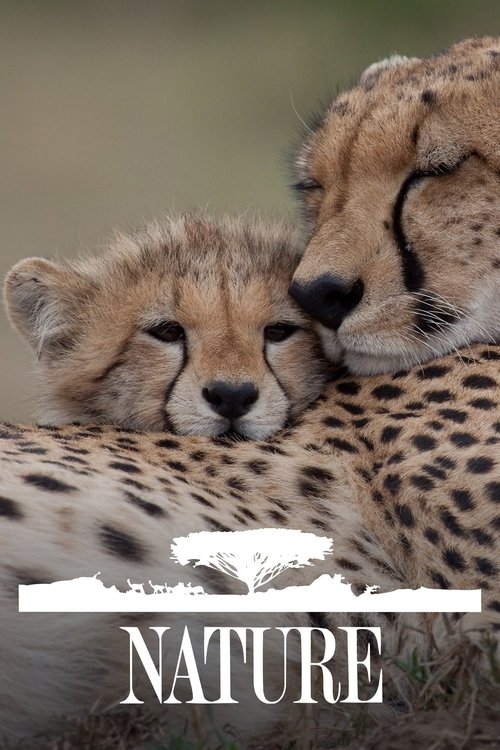
Consistently stunning documentaries transport viewers to far-flung locations ranging from the torrid African plains to the chilly splendours of icy Antarctica. The show's primary focus is on animals and ecosystems around the world. A comic book based on the show, meant to be used an as educational tool for kids, was briefly distributed to museums and schools at no cost in the mid-2000s.
Where to Watch (US)
Stream
 YouTube TV
 PBS
PBS
 WETA+
WETA+
Buy
 Apple TV
 Google Play Movies
Seasons
Season 1
Following the path of the condor, whose ten-foot wingspan enables it to soar effortlessly over the peaks of the Andes mountains, this film starts at the storm beaten rocks of Cape Horn at the southern tip of South America and journeys north to the highest peak in the Americas - Aconcagua. Along the way, we see exotic animals and birds such as the penguin, hummingbird, sea otter, guanaco, ostrich-like rhea, and puma.
Season 2
The vast areas of kelp growing on the bottom of the Pacific Ocean provide a vital food source for countless creatures.
Season 3
An examination of the Indonesian volcanic island Krakatoa, focusing on the global effects of the disastrous 1883 eruption that was heard 3,000 miles away and killed 36,000 people.
Season 4
Torrential rains flood Kenya’s Tsavo Plain triggering a cycle of animal and plant regeneration that flowers in the short period before the next drought.
Season 5
Examines how the plants and animals of Alaska’s Alyeska wilderness have adapted to the regions harsh climate.
Season 6
Wildlife flourishes in Nevada's desert landscape because of one narrow river covering less than 1% of the land.
Season 7
An exploration of the Spanish Pyrenees mountains and the bearded "bonebreaker" vulture that lives in this harsh environment.
Season 8
The area's evolutionary roots opens this look at the African valley.
Season 9
Sharks, rays, squids and blue whales live in the Pacific Ocean off the California coast.
Season 10
This program features the Kogi tribe who live in the Sierra Nevada de Santa Marta in Columbia. They are pre-Columbian peoples, and consider themselves as the elder brothers of humankind. They insist that it is the modern world, the younger brothers, who are destroying the harmony of life on earth.
Season 11
This miniseries starts off by exploring the abundance of wildlife around the Volga Delta in Russia’s Astrakhan region.
Season 12
Timothy Dalton searches for wolf habitats in North America to learn more about the animal
Season 13
Following Anthony Hopkins to Tanzania to study lions. Included: an encounter with Masai warriors; the lioness's role in the hunt; footage of zebras and wildebeests.
Season 14
"Jaguar: Year of the Cat" follows the predator in its native rain forests of Belize. Included: a pair stalk turtles, peccaries and armadillos; scenes of the habits of their animal neighbors, including toucans and ocelots.
Season 15
In the NATURE program SPERM WHALES: THE REAL MOBY DICK, the efforts of Jonathan Gordon and other researchers to study the whales' physicality, modes of communication, and social interactions contribute to our understanding of the underwater world.
Season 16
TOOTHWALKERS presents extremely rare under-the-ice footage that reveals a complex and potentially dangerous side to this huge and often mysterious mammal.
Season 17
The polar bear rules the north. To the hardy native people who settled the harsh lands of the Arctic, the powerful hunter with the ghostly white coat is known as the “lonely roamer.” But most of us know the huge mammal as the polar bear. And the story of how the world’s largest land predator prospers in one of Earth’s harshest environments is the subject of the NATURE program Great White Bear.
Season 18
Documentary that explores Antarctica's weather phenomena, its rugged and adaptable wildlife and the powerful dynamics of its ever-changing icecap. Part 1 discusses the effects of the katabatic -- the relentless wind that sweeps over the Antarctic landscape, often at speeds of more than 100 mile per hour, re-sculpting the topography of the continent and affecting the climate of the entire southern hemisphere.
Season 19
Julia Roberts, one of the most famous and beautiful American actresses of today, lives among the nomads of Mongolia and discovers their relationship with the horse.
Season 20
Just like the mighty herds of wildebeest, the people who make their homes on Africa's great Serengeti plains are constantly on the move. This episode focuses on two women searching for their spiritual identity. Alice Wangui, a Nairobi hair salon owner, takes a trip to her native Kikuyu village so that her child will be born with a sense of community. On the savanna proper, Flora Salonik lives in an isolated farming hamlet, and struggles with the decision of whether or not to return to her own roots: the bustling metropolis of Arusha, Tanzania.
Season 21
Lynn Sherr, the award-winning correspondent for ABC TV’s 20/20 newsmagazine, went to Africa for the first time in 1973 and fell in love — with giraffes. “They were a dazzling, unexpected revelation: gawky, graceful anomalies; cool, gentle giants dressed in golden, stained-glass coats. And when they ran, they seemed to float. I was hooked.” Journey to Kenya and South Africa, and to an American zoo that is the giraffe breeding capital of the Western Hemisphere, for a revealing look at this powerful, captivating creature when Ms. Sherr hosts Tall Blondes.
Season 22
A chronicle of hippopotamus life along the banks of Zambia's Luangwa River includes footage of males fighting over territory; females protecting their young; the hippo's importance to river ecology; and societal rituals involving the head male of the pod. Mark Hamill narrates.
Season 23
The big cats of Africa have always been favored subjects of wildlife filmmakers. But as little as 15 years ago, no one had captured the unforgettable image of a leopard in its ghostly nocturnal stalk. Viewers had never seen intimate portrayals of the sleek and elusive serval, or witnessed the nighttime romps of the beautiful black-eared caracal.
The team of Owen Newman and Amanda Barrett filled those gaps with a series of spectacular breakthrough films in the 1990s. Among the first to apply infrared light and night vision goggles to wildlife studies, they combined technology with intrepid determination and a strong dose of luck, illuminating the cats we hardly knew, and giving us fresh insights into those we only thought we knew, such as lions and cheetahs.
Season 24
On the southeast coast of Australia, the town of Eden nestles along the shores of Twofold Bay. It was once a center of Australia’s thriving whaling industry, in part because it lies along the migration path of baleen whales swimming northward from the Antarctic. But residents say Eden’s whalers got some unusual help — from orcas, or killer whales, that patrolled offshore.
Season 25
In 1959, the United States Air Force captured dozens of baby chimpanzees in Africa, transporting them to Alamogordo, New Mexico where they and their offspring were enlisted into in the space program.
NATURE's "Chimpanzees: An Unnatural History" explores the lives of these chimpanzees who were forced to endure a grueling life as the ultimate human stand-ins.
Season 26
The Season 26 opener probes colony collapse disorder---the dramatic loss of honeybees in North America and Europe. The honeybee is responsible (via pollination) for one of every three bites of food people eat. Included: long-term ramifications; possible causes.
Season 27
On a remote Arctic island, a breeding pair of gyrfalcons and a pack of Arctic wolves struggle to raise their young as nine months of snow and ice melt away.
Season 28
The epic story of a wild stallion continues with the third installment of the Cloud series.
Season 29
Cuba may have been restricted politically and economically for the past 50 years, but its borders have remained open to wildlife for which Cuba’s undeveloped islands are an irresistible draw. While many islands in the Caribbean have poisoned or paved over their ecological riches on land and in the sea in pursuit of a growing tourist industry, Cuba’s wild landscapes have remained virtually untouched, creating a safe haven for rare and intriguing indigenous animals, as well as for hundreds of species of migrating birds and marine creatures. Coral reefs have benefited, too. Independent research has shown that Cuba’s corals are doing much better than others both in the Caribbean and around the world.
Season 30
What happens to nature after a nuclear accident? And how does wildlife deal with the world it inherits after human inhabitants have fled? Radioactive Wolves examines the state of wildlife populations in Chernobyl’s exclusion zone, an area that, to this day, remains too radioactive for human habitation.
Season 31
Conservation ecologist Chris Morgan embarks on a challenge that will fulfill a lifelong dream — to find and film a Siberian tiger living wild and free in Russia’s far eastern forests. To help him, Morgan turns to Korean cameraman Sooyong Park, the first individual ever to film Siberian tigers in the wild.
Season 32
Snow geese, pelicans, and bald eagles fly over the Great Plains, the Grand Canyon, Alaska, New York City and the Golden Gate Bridge as they encounter and engage with bears, dolphins, bison, and spawning fish.
Season 33
Documentary showing penguins as they have never been seen before. From the Antarctic to the tropics, spy cameras capture unique footage of three extraordinary species.
Season 34
Part 1 of 2. The Season 34 premiere focuses on the work of human caretakers of orphaned baby animals. At Australia's Cape Otway Conservation Centre, the staff cares for a baby koala found along a road. It's weak and underweight, and should be spending its first six months inside its mother's pouch; the staff gives it a teddy bear to hold for comfort. At a sanctuary in Costa Rica, meanwhile, primatologist Sam Trull cares for six baby orphan sloths, including one that has pneumonia.
Season 35
With high speed camerawork and breakthrough new science, we enter the fast-paced world of hummingbirds as never before. Speed is their middle name. Their lives are moving faster than the eye can see. They possess natural born super powers that enable them to fly backwards, upside-down, and float in mid-air. And for the first time, we see them mate, lay eggs, fight, and raise families in intimate detail. They are great athletes, tender mothers, brave in combat, and up for any challenge. They are Super Hummingbirds, the smallest and most brilliant birds on earth.
Season 36
A moving story of how an orphaned baby elephant beat the odds.
Season 37
Uncover the secret lives of big cats who thrive in all four corners of the globe, from the solitary snow leopard to the nimble rusty-spotted cat, seen through the latest camera technology and science.
Season 38
A look at at various octopuses and the scientist that are trying to learn more about them.
Season 39
Unlock the mysteries of wild pandas whose counterparts in captivity are known for their gentle image. Journey through the steep Qinling Mountains with filmmakers, scientists and rangers to witness pandas’ startling courtship and aggressive behaviors.
Season 40
A story of surprise and revelation. A wildlife cameraman spends his time during the coronavirus pandemic lockdown filming the bees in his urban garden and discovers the many diverse species and personalities that exist in this insect family.
Season 41
Witness the great wildebeest migration in East Africa, the most impressive mass movement of land animals on Earth. Travel with two Maasai guides who expose today’s conflict between people and wildlife and share new ideas for co-existence.
Season 42
Witness the story of Pete Walsh, a Tasmanian man who befriends a platypus he names Zoom. With the help of experts, Pete learns more about the platypus’s secret world in a mission to protect them from the dangers of urban development.
Season 43
Follow filmmaker Vianet Djenguet as he documents a grueling but vital mission to habituate a notoriously protective 500-pound silverback, in a last-ditch effort to save the critically endangered Eastern lowland gorillas from extinction.
Season 44
Follow a paleontologist on an Arctic adventure to uncover the hidden lives of walrus and the threats they face as climate change shrinks the sea ice.
Related
Network
PBS
Production
Thirteen, Coneflower Films Studios, Trebitsch Produktion International GmbH, Rubin Tarrant Productions
Keywords
love of animalsanimal specieswildlifeanimalsnatureenvironmentalhelping animalsanimal kingdomknowledgenature documentary