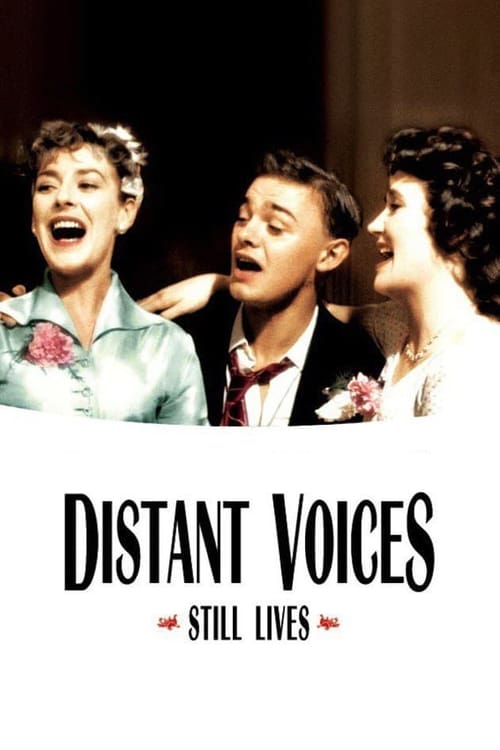
Distant Voices, Still Lives
1988
⏱️ 84 min
📅 Released
🌐 EN
DramaMusic
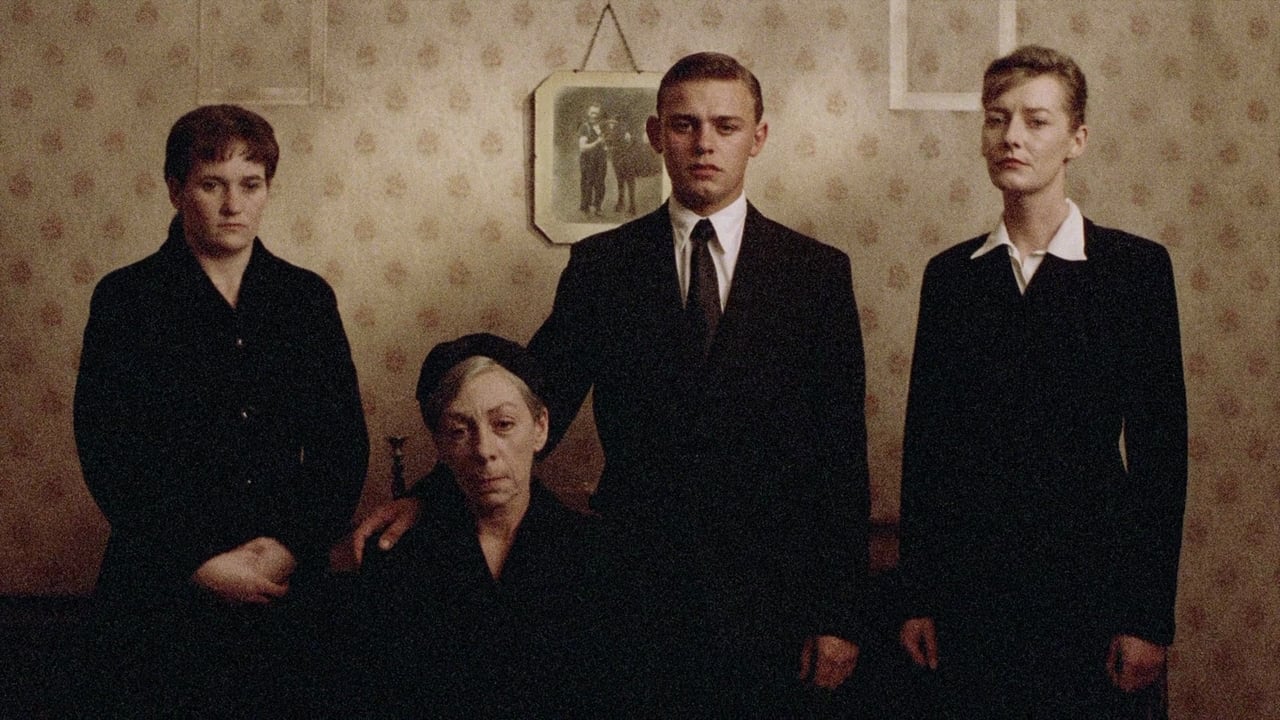
Siblings Maisie and Tony, along with their mother, gather for their sister Eileen's wedding. It is a joyous occasion, but through flashbacks, it becomes clear that the family was not always happy. Their father was physically abusive to his wife and left the children emotionally traumatized. As a result, the children have grown into unhappy adults, looking for love they didn't receive when they were young.
Where to Watch (US)
Stream
 BFI Player Amazon Channel
Rent
 Amazon Video
 Apple TV
 Google Play Movies
 YouTube
Buy
Amazon Video
Apple TV
Google Play Movies
YouTube

User Reviews
September 5, 2023
This film is a little like an LP. It has two distinct sides. One "Distant Voices" focuses on just what makes the father of a small family tick. Two - "Still Lives" dwells more on the lives of the children. Unlike on the vinyl though, once we are on that side of the record there are no tracks. The story flits about with a non-consistent chronology to bring us the happy, the sad, the brutal and the gentle and it really does showcase well the acting talents of Pete Postlethwaite as the father. A man of the times, who treats women with scant regard. Not, perhaps, because he is inherently cruel or nasty, but because he knows no better? Even his wife (a strong, if sparing, contribution from Freda Dowie) has to tread on eggshells much of the time. There are three children - "Eileen" (Angela Walsh); "Maisie" (Lorraine Ashbourne) and "Tony" (Dean Williams) and their lives, loves and wartime experiences feature potently in the second stage of this drama that tells us much about the societal influences - and expectations - of families, of men, of soldiers and it's quite thought-provoking. It's about love, too, but not in much of a sentimental manner. Relationships have to have a gritty, pragmatic, aspect to them - and it falls to the youngsters to try and change these entrenchments from varying degrees of success and happiness themselves. There is very little dialogue, here. Most of the narrative relies on the glorious photography and the use of contemporaneous songs from the likes of Ella Fitzgerald, Johnny Mercer and some beautifully performed choral works that prove to be truly effective at setting and maintaining a sense of the struggles and joys of this working-class, sometimes unpromising, existence. It's certainly well worth a watch - a few times, I'd say.
Crew
Director
Terence Davies
Writer
Terence Davies
Producer
Jennifer Howarth, Colin MacCabe
Production
BFI, Film Four International
Keywords
liverpool, englandfamily relationshipssinger1940s1950s